
- Blepharoplasty
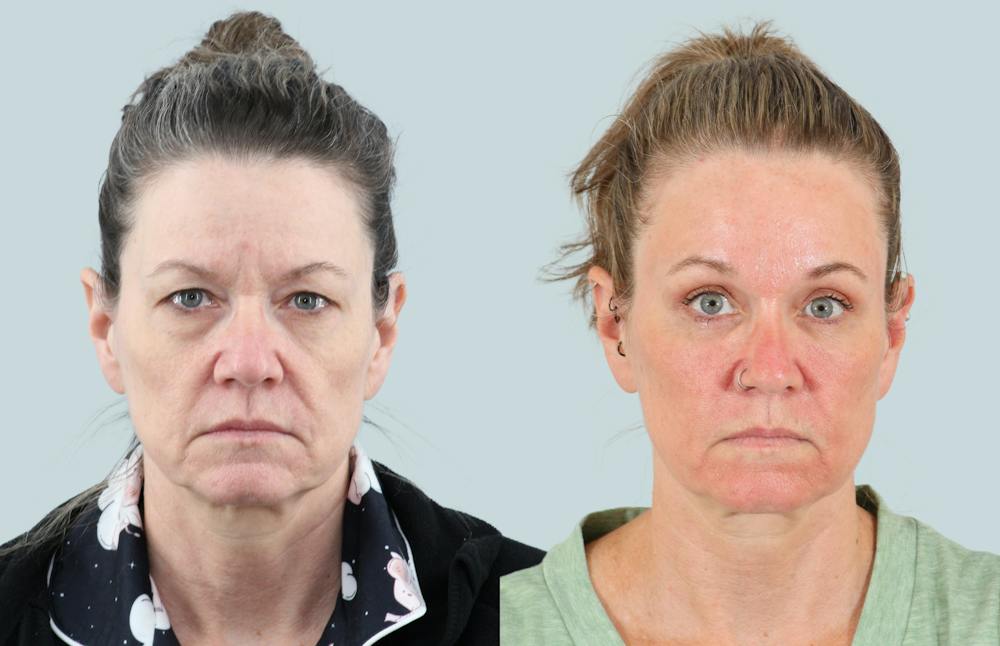
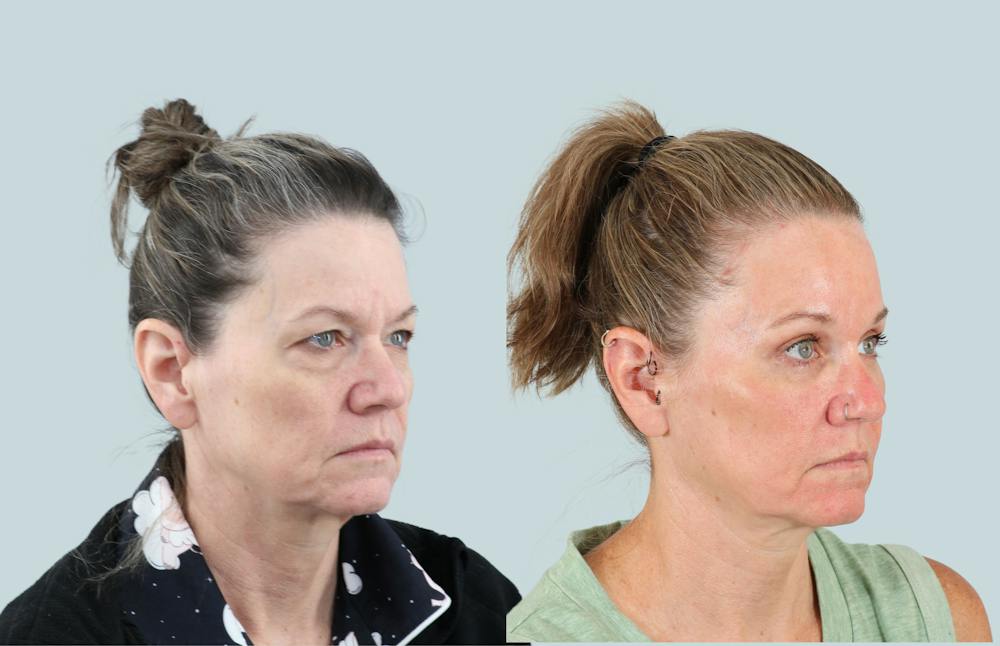
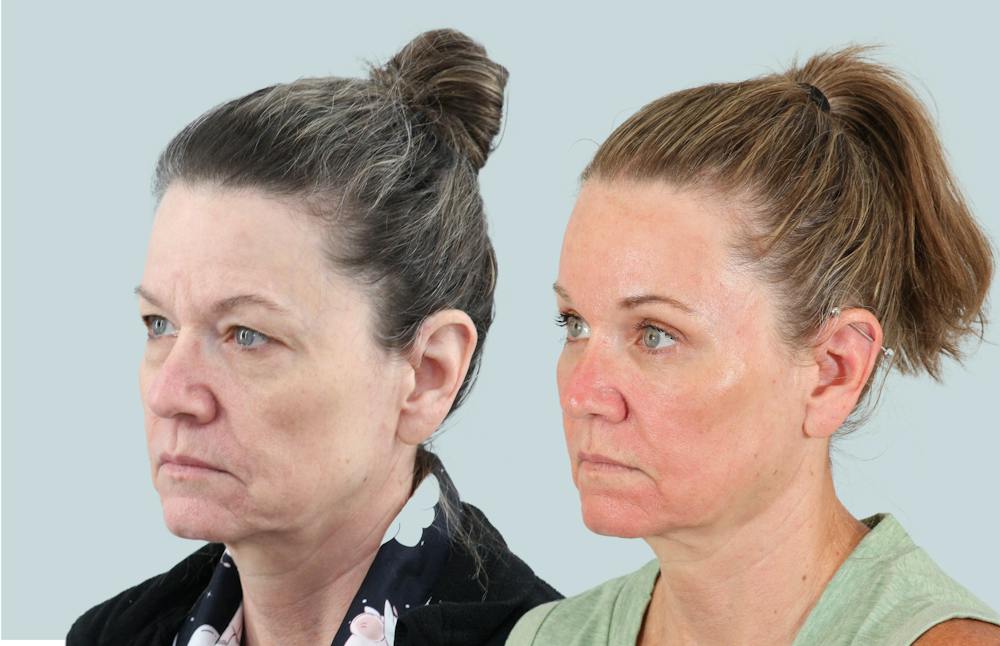
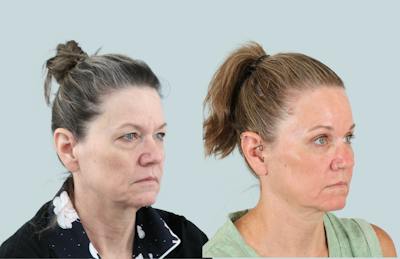
A 53-year-old female presented to Dr. Harbison seeking comprehensive eyelid and periorbital rejuvenation, frustrated that she constantly appeared tired even when fully rested. A detailed examination identified multiple interconnected aging changes around the eyes: mild brow ptosis (sagging brows adding downward weight), upper eyelid dermatochalasis (redundant skin folds), lower lid bags caused by orbital fat pseudoherniation, surface skin crepeyness, and prominent tear trough/orbital hollowing. Because periorbital aging is rarely isolated to just one issue, addressing each anatomical component was essential to restoring an awake, rested appearance without distortion.
Surgical Approach:
Dr. Harbison performed a customized 360-degree periorbital rejuvenation combining four synergistic techniques:
Upper Blepharoplasty: With the brows naturally stabilized, Dr. Harbison performed a conservative upper eyelid skin excision to remove true cutaneous excess, preserving full lid closure and native soft tissue contours.
Transconjunctival Lower Blepharoplasty & Fat Grafting: To resolve under-eye puffiness, pseudoherniated orbital fat was carefully contoured via an internal, transconjunctival approach, leaving no external lower eyelid incision. Autologous micro-fat grafting was then layered into the deep tear trough depressions to eliminate orbital hollows and transition smoothly into the upper cheek.
Endoscopic Brow Lift: Small, hidden incisions within the hair-bearing scalp were used to gently reposition and secure the descended brow arches, re-establishing proper brow height and alleviating redundant weight off the upper lids.
Periorbital Laser Resurfacing: Fractional laser skin resurfacing was applied across the eyelid skin to treat surface crepeyness, boost collagen remodeling, and contract fine lines without cutting external lower eyelid skin.
Results & Recovery:
Shown at 3 months post-operative. The patient exhibits a completely refreshed, youthful, and naturally awake appearance. Incisions are imperceptible—concealed inside the hairline, within the natural eyelid fold, and internally behind the lower lid. By focusing on structural restoration, volume replenishment, and gentle elevation rather than over-resection, Dr. Harbison preserved the natural almond shape of her eyes, completely avoiding the hollowed, pulled, or "surprised" look all too common with traditional blepharoplasty.
View Other Patients