
- Rhinoplasty
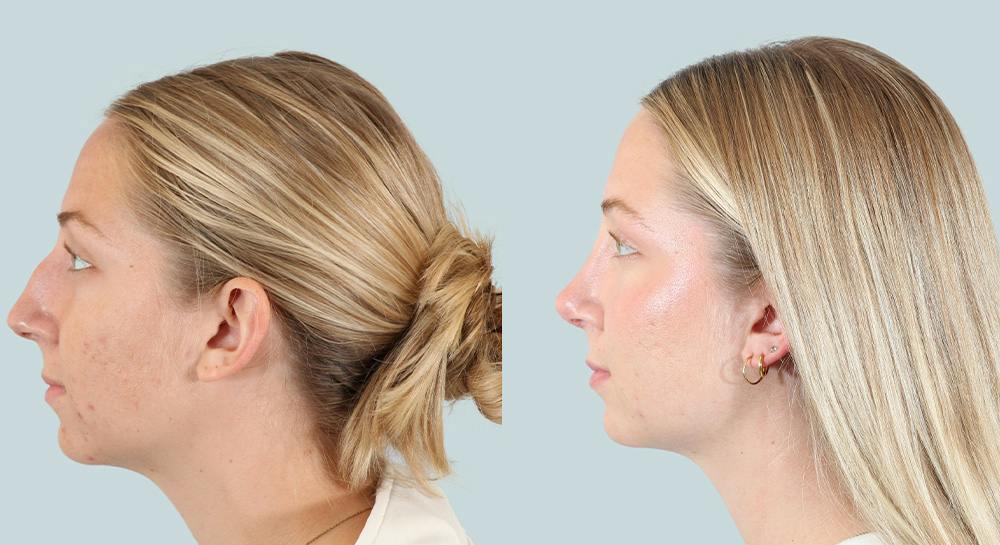
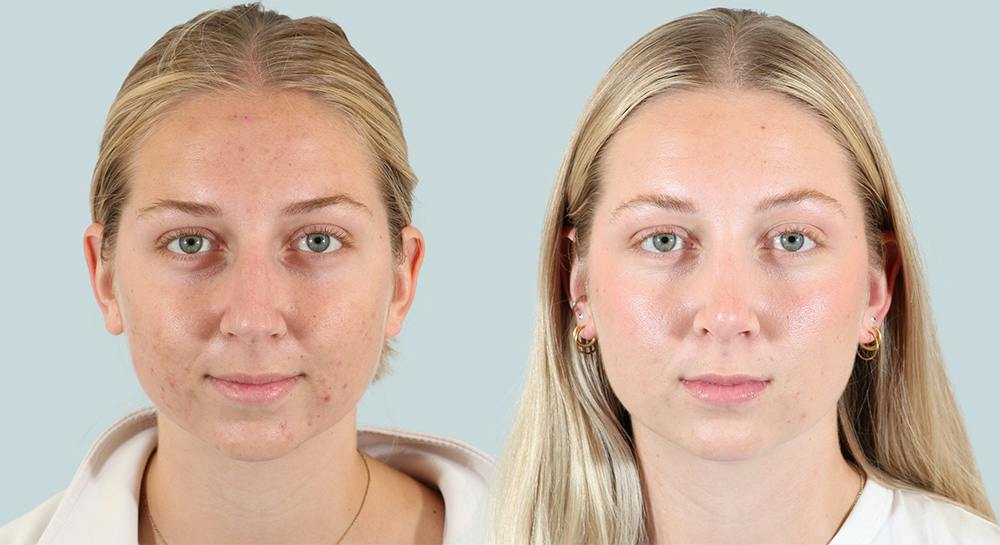
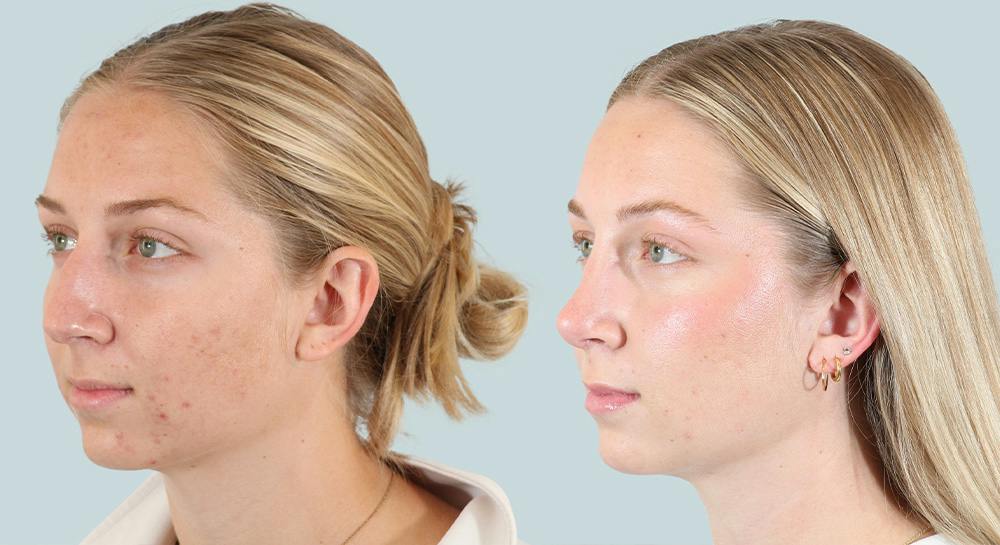
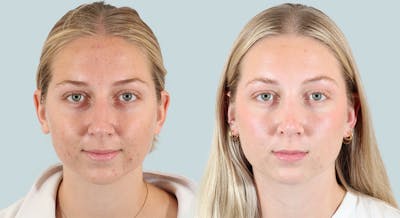
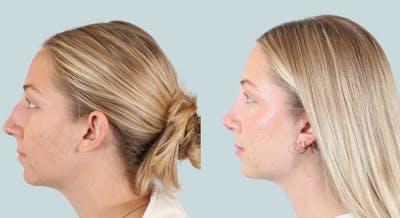
A 23-year-old female presented to Dr. Harbison seeking primary rhinoplasty. Her primary aesthetic complaint was a prominent dorsal convexity (dorsal hump) that disrupted her facial balance and profile harmony. In planning her correction, the priority was not simply removing the hump, but reconstructing the nasal architecture to prevent post-surgical airway narrowing and maintain durable tip support over time.
Surgical Approach:
Dr. Harbison performed a primary structural rhinoplasty utilizing autologous septal cartilage grafting. The bony and cartilaginous dorsum was conservatively reduced to smooth the nasal bridge while intentionally defining a soft, natural supratip break. To secure lasting tip projection and prevent drooping, Dr. Harbison placed a caudal septal extension graft. Paired spreader grafts were then positioned along the middle vault to rebuild the dorsal aesthetic lines and protect internal nasal valve function. Finally, precision osteotomies were performed to reset and narrow the nasal bones, closing the open roof created by the dorsal reduction.
Results & Recovery:
Shown at post-operative follow-up (insert timeframe, e.g., 3 months / 6 months / 1 year). The patient exhibits a refined, natural profile with a smooth dorsal aesthetic line and a stable, supported tip. The integration of structural spreader grafts and a septal extension graft ensures both optimal long-term breathing function and lasting aesthetic stability as final healing progresses over the 12-month period.
Location:
Procedure performed at Omaha Face AAAASF-Accredited Surgery Center.
« Previous
Next »
View Other Patients