
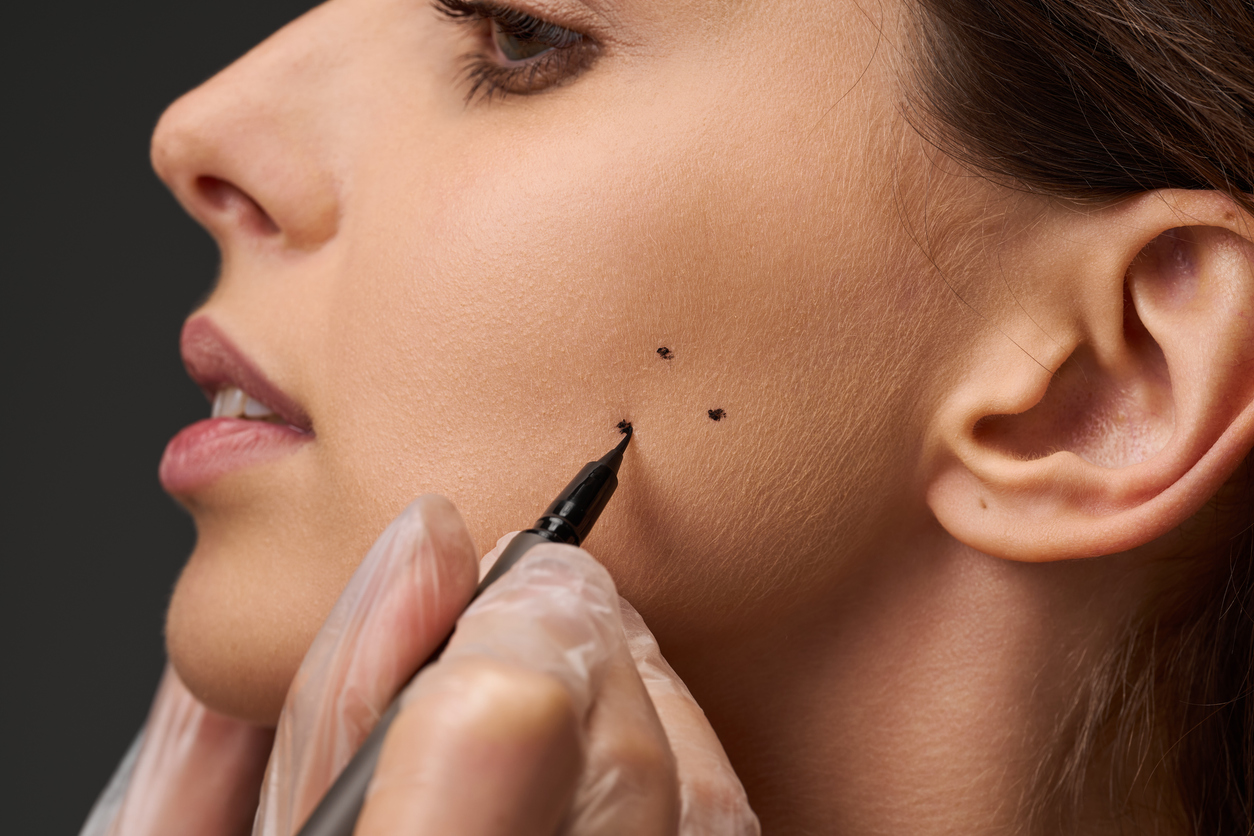
Masseter BOTOX treats two distinct concerns: a wider lower jaw that patients want slimmed, and nighttime teeth grinding or clenching that causes soreness and headaches. The dosing varies depending on your goal.
At Omaha Face, Dr. John Harbison's team tailors the injection plan to your specific concern rather than applying a single standard dose to every patient. Dr. Harbison's double board certification and background in head and neck surgery give him a detailed working knowledge of facial muscle anatomy, which matters directly here, since precise placement around the masseter is what separates a natural result from an uneven one. That same precision has helped establish Omaha Face's medspa as a repeat winner of the Best of Omaha and Omaha's Choice Awards for facial aesthetics.
What Masseter BOTOX Treats: A Wide Jaw, Night Grinding, or Both
Patients seek out masseter BOTOX for one of two reasons, and sometimes both at once. Jaw slimming addresses the square or wide appearance created by an overdeveloped masseter muscle, while clenching relief targets the physical symptoms of bruxism and TMJ tension.
Common symptoms that bring patients in for masseter BOTOX include:
- A square or wide lower facial shape
- Morning jaw soreness or fatigue
- Worn or flattened tooth enamel
- Tension headaches originating near the jaw
- Popping or clicking in the jaw joint
Because contouring and clenching are treated with different goals in mind, the consultation at Omaha Face starts by identifying which concern (or both) is driving your interest in treatment.
Masseter Dosing: 20-30 Units Per Side for Contour, 30-50 for Clenching
Dosing depends entirely on your treatment goal. Most patients receive roughly 20 to 30 units per side for jaw slimming and 30 to 50 units per side for strong clenching or TMJ-related symptoms, according to a medical review published by Drugs.com.
Dosing and placement come down to a few key factors:
- Contour goals: Require enough units to gradually reduce muscle bulk over several months.
- Clenching relief: Requires a functional weakening of the muscle to reduce grinding force, typically at a higher unit range.
- Injection zone: Placed below the zygomatic arch, in the body of the masseter muscle.
- Risorius avoidance: Careful placement avoids the nearby risorius muscle, as straying into that area can affect the natural movement of the smile.
Why Jaw Slimming Takes Longer Than Forehead BOTOX
Clenching relief and visible slimming happen on very different timelines, so patience matters here. Clenching symptoms often improve within one to two weeks, but visible jaw slimming takes six to twelve weeks to appear as the masseter muscle gradually atrophies.
One course of masseter BOTOX typically lasts around four to six months, longer than typical upper-face treatment, according to a cost and duration guide published by Facial Esthetics. Setting these expectations up front prevents the common concern that treatment "didn't work" when a patient checks their jawline at the two-week mark, before slimming has had time to develop.
Risks Specific to the Masseter: Smile Asymmetry and Chewing Fatigue
Masseter BOTOX carries a few risks specific to this muscle group that largely depend on injector technique. These include:
- Chewing fatigue: Temporary fatigue with tougher foods as the muscle weakens.
- Paradoxical bulging: A bulge that can appear at the edge of the treated area before the muscle fully softens.
- Smile asymmetry: The more serious risk, which occurs when the injection strays into the nearby risorius muscle.
Because these outcomes are technique-dependent rather than a fixed risk of the treatment itself, seeking care from a facial plastic surgeon familiar with facial muscle anatomy matters more here than with many other injectable treatments.
Masseter BOTOX vs. Surgical Jawline Contouring
Masseter BOTOX and surgical jawline contouring solve the same concern with very different levels of permanence and downtime:
- Masseter BOTOX: Temporary, non-surgical, and reversible as the muscle recovers over several months.
- Surgical jawline contouring: Produces a permanent skeletal change but requires recovery and commitment to surgery.
Patients seeking a permanent structural change to the jawline should discuss surgical options with Dr. Harbison during the consultation, while those seeking a temporary, adjustable approach are typically better candidates to start with masseter BOTOX.
Find Out Why Omaha Trusts Dr. Harbison's Team for Masseter BOTOX
Because results depend heavily on precise injection technique, Dr. Harbison and his trained team evaluate your jaw anatomy and goals in detail before recommending a dosing plan. Contact Omaha Face at (402) 685-3722 to schedule your masseter BOTOX consultation in Elkhorn, NE.
Disclaimer: This information is provided for educational purposes only and does not replace a consultation with a board-certified plastic surgeon. Outcomes, risks, and suitability vary from patient to patient.
