
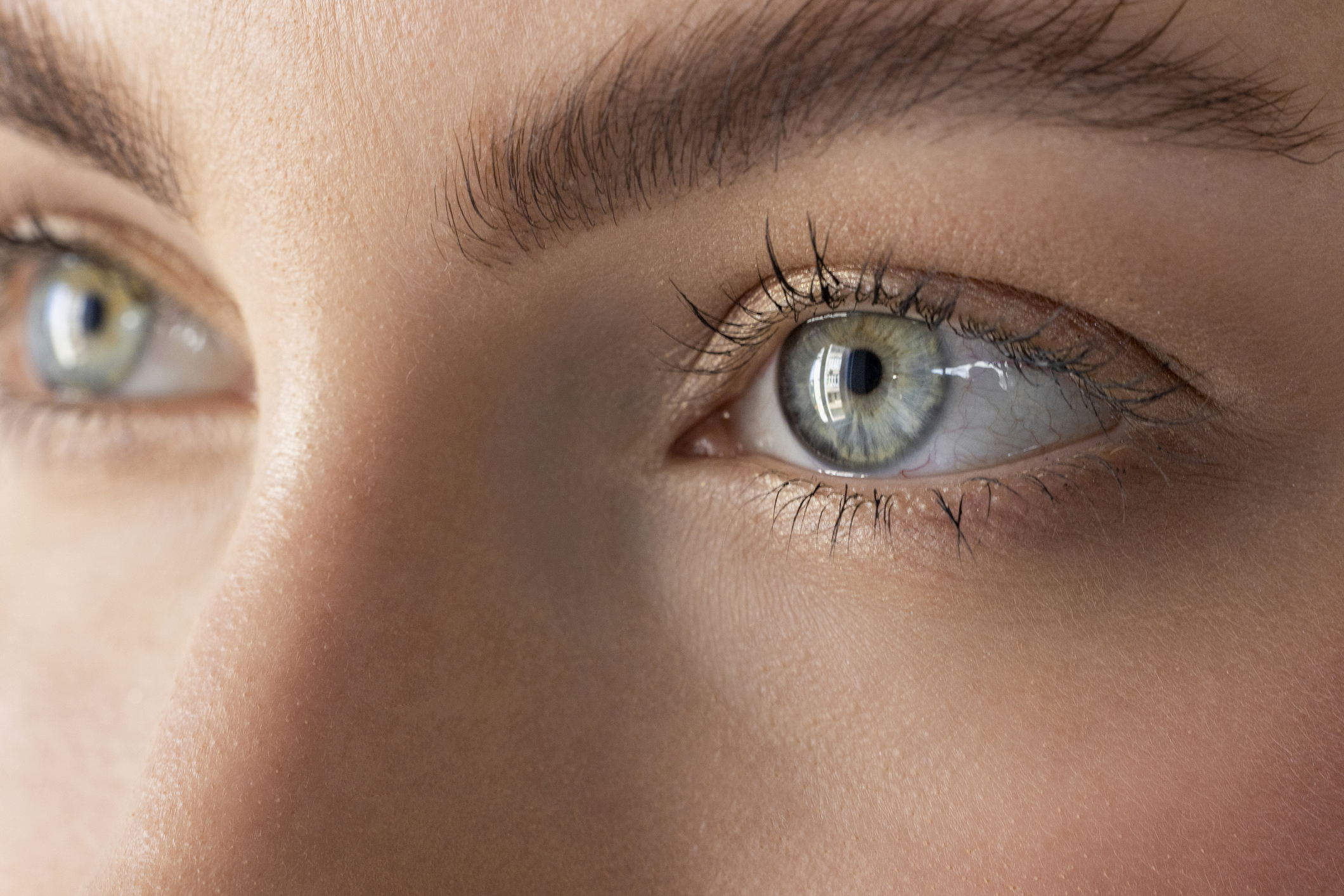
Eyelid surgery is required when the problem is excess skin or bulging fat. Non-surgical treatments such as BOTOX, filler, laser resurfacing, and RF microneedling can soften lines, replace lost volume, and modestly tighten skin. However, nothing injected or applied to the skin can remove a fold of redundant eyelid skin or reposition herniated fat. When either of those is the cause, eyelid surgery in Omaha is the treatment that actually corrects it.
Dr. John Harbison is a double board-certified facial plastic surgeon who trained in oculoplastic and facial rejuvenation techniques during his fellowship at the University of California-Irvine. Because Omaha Face offers both blepharoplasty and a full-service med spa, Dr. Harbison has no reason to push one route over the other. In this blog, he explains what each treatment can and cannot do, when surgery becomes the better investment, and how the two approaches work together.
The One Question That Decides It: Is the Problem Skin, Fat, Volume, or Muscle?
Whether you need eyelid surgery or a non-surgical treatment depends on which structure is causing your concern. Aging around the eyes comes from four underlying changes, and each responds to a different category of treatment:
- Excess skin: Stretched, redundant skin that folds over the upper lid or bunches on the lower lid. This requires surgical removal through blepharoplasty.
- Herniated fat: Fat that pushes forward to form under-eye bags or puffy upper lids. This requires surgical removal or repositioning.
- Volume loss: Hollowing in the tear trough or upper lid as fat and bone thin with age. Filler or fat transfer can restore it.
- Muscle activity: Repeated squinting and smiling that etch crow's feet. Neuromodulators such as BOTOX relax the muscle responsible.
Most people have more than one of these changes at once. That is why a careful exam, rather than a single favorite treatment, should drive the plan.
What BOTOX Around the Eyes Can and Cannot Do
BOTOX around the eyes smooths crow's feet and can create a subtle brow lift, but it cannot lift a hooded eyelid or remove skin. It works by relaxing the lateral orbicularis oculi, the circular muscle whose squinting action creates lines at the outer corners of the eyes.
When placed in the muscles that pull the brow downward, BOTOX can also produce a modest "chemical brow lift." This opens the eye area slightly, but the effect is measured in small amounts. It is not a substitute for a brow lift or upper blepharoplasty.
There are real limits to keep in mind. BOTOX does not remove excess eyelid skin, and too much toxin in the forehead's frontalis muscle can actually worsen brow heaviness. Many people with hooding unknowingly raise their brows all day to keep their eyes open, and relaxing that muscle lets the brow drop.
According to the American Society of Plastic Surgeons, neurotoxins take effect within 3 to 5 days, reach full results in 7 to 10 days, and generally last 3 to 4 months. Most patients return for treatment three to four times a year to maintain results.
Tear Trough Filler: The Right Patient and the Wrong Patient
Tear trough filler works best for true under-eye hollowing in someone with good skin quality and no bulging fat. In that patient, a small amount of hyaluronic acid dermal filler smooths the groove between the lower lid and cheek and softens the shadow that reads as tiredness.
The same treatment can make other patients look worse. Tear trough filler is usually a poor choice for people with:
- Pre-existing under-eye bags: Filling the hollow beneath a fat bulge often makes the whole area look puffier.
- Lower-lid laxity: Loose lower lids cannot support added volume well.
- Fluid retention: Hyaluronic acid attracts water, which can worsen swelling in patients prone to morning puffiness.
- Very thin skin: Filler placed too superficially can show through as a bluish tint, known as the Tyndall effect.
One real advantage is reversibility. As ASPS notes, hyaluronic acid fillers can be dissolved if a patient is unhappy with the result. The most common lasting complication to watch for is malar edema, a persistent swelling over the upper cheek.
Tear trough results tend to outlast filler in more mobile areas. A study in the Journal of Clinical and Aesthetic Dermatology reports that published durations typically range from 8 to 12 months, though the authors observed results persisting beyond 24 months in some patients.
Laser Resurfacing and RF Microneedling for Crepey Lower-Lid Skin
Laser resurfacing and RF microneedling improve the quality of thin, crepey lower-lid skin, but they do not remove a fold of excess skin. Each device targets a slightly different concern:
- Fractional laser resurfacing: Laser skin resurfacing and the Frax laser treat fine lines, rough texture, and mild laxity by stimulating new collagen. Deeper treatments usually mean several days of redness and peeling.
- Morpheus8 RF microneedling: Morpheus8 delivers radiofrequency energy beneath the surface to firm and thicken thin skin, typically with a few days of mild redness and swelling.
- Broadband light (BBL): Broadband Light Therapy targets brown spots and redness rather than laxity, with little to no downtime.
Most energy-based treatments work best as a series spaced several weeks apart, and collagen continues to build for months afterward. Dr. Harbison's team will recommend a specific number of sessions after examining your skin.
The honest ceiling is this: these treatments make skin healthier and firmer, but skin that bunches or hangs still needs to be removed. Resurfacing is often staged with or after lower blepharoplasty rather than used in its place. The Omaha Face eyelid surgery page notes that Dr. Harbison may also use laser treatment to tighten under-eye skin as part of a surgical plan.
When Only Eyelid Surgery Will Work
Eyelid surgery is the only effective option when excess skin or herniated fat is causing the problem. If any of the following describe you, non-surgical treatments are unlikely to deliver the improvement you want:
- A fold of upper-lid skin rests on or near your lashes.
- Hooded lids block the top or outer edges of your vision.
- Under-eye bags stay the same no matter how well you sleep or how little salt you eat.
- Your upper eyelid crease has disappeared beneath overhanging skin.
- Lower-lid skin bunches into folds when you gently pinch it.
- You raise your eyebrows throughout the day just to see clearly.
When hooded lids interfere with vision, eyelid surgery can do more than refresh your appearance. The Omaha Face eyelid surgery page notes that removing that excess tissue may improve your field of view, and ASPS notes that insurance may cover blepharoplasty performed to remove skin covering the lashes.
Dr. Harbison also screens for related problems that change the plan, such as a drooping brow or weakness in the muscle that lifts the eyelid. Treating the wrong structure is one of the most common reasons patients are disappointed with eye rejuvenation.
Eyelid Surgery Cost Over Five Years: Repeat Treatments vs. One Operation
Over five to ten years, ongoing non-surgical maintenance can cost more than eyelid surgery, while still leaving excess skin and fat untreated. Non-surgical treatments are not a bad investment, since they are the right answer for many concerns. But for patients who truly need surgery, it helps to see the numbers side by side.
According to the American Society of Plastic Surgeons, the national average surgeon's fee is $3,359 for upper blepharoplasty and $3,876 for lower blepharoplasty. Those averages do not include anesthesia, facility fees, or other related costs, so your total will be higher.
For comparison, here is a sample maintenance plan priced using the starting rates on the Omaha Face med spa price list. It assumes BOTOX for crow's feet three times a year (about 24 units at $13 per unit), one tear trough filler treatment a year (starting at 600), and a microneedling series of three (800) every other year.
|
Treatment approach |
Year 1 |
5 years |
10 years |
|
Sample non-surgical maintenance plan |
About $1,940 |
About $9,680 |
About $19,360 |
|
Upper blepharoplasty, national average surgeon's fee |
$3,359 one time |
$3,359 |
$3,359 |
|
Upper and lower blepharoplasty, national average surgeon's fees |
$7,235 one time |
$7,235 |
$7,235 |
Durability is the other half of the comparison. BOTOX lasts roughly 3 to 4 months and filler typically less than two years. Eyelid surgery results usually last 5 to 10 years or more, according to Dr. Harbison's eyelid surgery FAQ, although aging continues afterward.
Your actual costs will depend on your anatomy, the products used, and whether procedures are combined. Dr. Harbison provides a detailed estimate at your consultation, and Omaha Face offers financing through PatientFi and CareCredit.
Eye Rejuvenation Treatment Matching Table
Each eye-area concern has a treatment that fits it best. Use the table below to match what you see in the mirror with the option most likely to help.
|
Concern |
Treatment that addresses it |
Surgical? |
Expected duration |
Realistic improvement |
|
Hooded upper lid |
Upper blepharoplasty, sometimes with a brow lift |
Yes |
Typically 5 to 10+ years |
Significant |
|
Lost upper lid crease |
Upper blepharoplasty |
Yes |
Typically 5 to 10+ years |
Significant |
|
Under-eye bags |
Lower blepharoplasty with fat removal or repositioning |
Yes |
Long-lasting |
Significant |
|
Tear trough hollow |
Hyaluronic acid filler or fat transfer |
No (filler) |
Filler: often 8 to 12 months or longer |
Moderate to significant in the right patient |
|
Crepey lower-lid skin |
Laser resurfacing or Morpheus8 |
No |
Builds over months; needs maintenance |
Mild to moderate |
|
Crow's feet |
BOTOX or Dysport |
No |
About 3 to 4 months |
Significant for dynamic lines |
|
Dark pigmentation |
BBL or IPL photofacial |
No |
Months to years with sun protection |
Mild to moderate |
|
Lower-lid laxity |
Lower blepharoplasty with lid tightening |
Yes |
Long-lasting |
Significant |
A Staged Plan: Using Eyelid Surgery and Non-Surgical Treatments in the Right Order
Most patients get the best result from surgery to correct structure, followed by non-surgical treatments to maintain skin quality and volume. The order matters, and Dr. Harbison follows a few sequencing rules:
- Surgery first for skin and fat. Blepharoplasty removes the excess skin and addresses the fat that no injectable or device can fix.
- Dissolve or let filler resorb before lower-lid surgery. Old tear trough filler can distort the anatomy and make it harder to judge how much fat to remove or reposition. It is usually dissolved or allowed to break down before surgery.
- Resurfacing follows excision. Laser or RF treatments are performed at the time of surgery or after healing, refining texture on skin that is now the right amount.
- Maintenance comes last. BOTOX for crow's feet, occasional filler, and medical-grade skincare help results look fresh for years.
Eyelid surgery is often combined with other procedures in a single session. According to the eyelid surgery FAQ, many patients pair blepharoplasty with a facelift or brow lift for a more complete rejuvenation.
Getting an Honest Eyelid Assessment in Omaha From Dr. Harbison
An honest assessment starts with a surgeon who offers both paths. Injectables are hugely popular: the ASPS 2025 Procedural Statistics Report found that neuromodulators and hyaluronic acid fillers made up 80% of all minimally invasive procedures in 2025. Popularity, however, does not make them the right fit for every eye.
Because Omaha Face provides both eyelid surgery in Omaha and a full med spa, Dr. Harbison can recommend BOTOX, filler, or resurfacing when they will genuinely be enough, and blepharoplasty when they will not. He is a double board-certified facial plastic surgeon with fellowship training at the University of California-Irvine, and he performs surgery in the practice's Quad A-accredited facility in Elkhorn.
To find out which approach fits your eyes, schedule a consultation or call (402) 685-3722. You can also browse the blepharoplasty before-and-after gallery or explore the med spa.
This information is provided for educational purposes only and does not replace a consultation with a board-certified facial plastic surgeon. Outcomes, risks, and suitability vary from patient to patient.
Sources
- American Society of Plastic Surgeons. Eyelid Surgery Cost.
- American Society of Plastic Surgeons. How Long Does Botox Last?
- American Society of Plastic Surgeons. How Long Do Dermal Fillers Last?
- American Society of Plastic Surgeons. Lift Procedures Led Growth as Demand for Restoration Drove Plastic Surgery in 2025, New ASPS Report Reveals. September 1, 2026.
- Journal of Clinical and Aesthetic Dermatology. Long-Term Effects of Tear Trough Hyaluronic Acid Filler: A Retrospective Study.
